
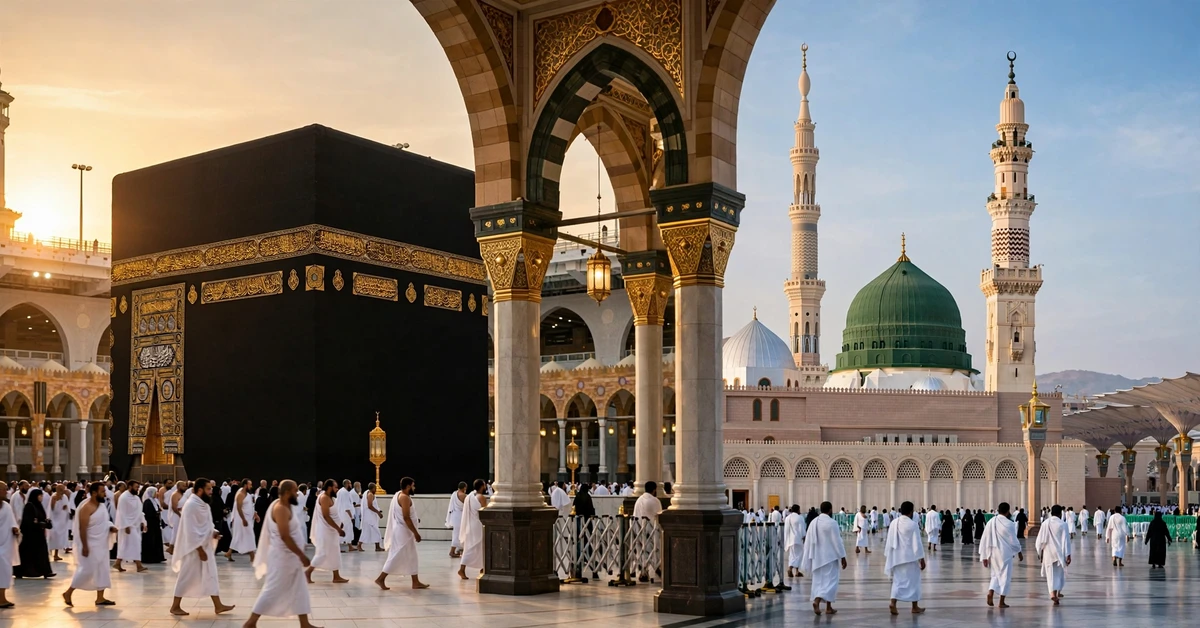
Introduction
Umrah is why you travel. Makkah and Madinah Ziyarat is what makes the journey feel complete.
Ziyarat means visiting the holy and historic places of Makkah and Madinah, the places where the history of Islam unfolded.
If you are travelling from the UAE, Ziyarat is usually part of your package. Your guide takes the group to the main sites in both cities. This guide tells you what each site is, why it matters, how to behave there, and what to carry with you.
Many pilgrims from Dubai, Sharjah, Abu Dhabi and Ajman travel with family, and for a lot of them this is a first trip. That is normal. You do not need to know everything before you go. You need a clear plan, a guide you can ask, and time to take each place in slowly. This guide is written for that kind of traveller, someone who wants to understand what they are seeing, not just tick a list and move on.
What Is Ziyarat and Why Does It Matter?
Makkah and Madinah Ziyarat is not part of the Umrah rites. Your Umrah is complete with Ihram, Tawaf, Sa’i and shaving or cutting the hair. Ziyarat is extra, and that is why it feels like a gift.
People love Ziyarat for a few simple reasons. It brings Islamic history close to you. Reading about Cave Hira is one thing. Standing at the foot of the mountain where the first revelation came down is something else. It also gives your free time between prayers a clear plan. And it is something you share. You travel with your group, your guide explains each site, and you remember the journey together.
Most Makkah and Madinah Ziyarat visits are short. Your guide will explain the history of each place, give you time for prayer and reflection, and then move on to the next site. Wear comfortable shoes, carry water, and listen to your guide about where to stand and how long to stay.
It helps to go with a simple mindset. Do not rush from one stop to the next in your head. Listen first, then take a quiet moment for yourself. If a story moves you, stay with it for a minute. If you have a question, ask it while you are still at the site, because that is when the answer makes most sense. A small notebook, or a note on your phone, can help too. Write down a dua you want to make, or a line from the guide that you want to remember when you get home.
Ziyarat in Makkah
The Ziyarat sites in Makkah are spread around the city and the valleys nearby. Most groups visit them in one guided tour, usually on a day when there is no other travel planned.
That one day can feel full, so it is worth treating it like a day out with a purpose. Eat well before you leave, carry water, and keep your bag light. You will be getting on and off the bus, walking a little at each stop, and standing to listen. If you pace yourself in the morning, the afternoon feels much easier.
Jabal al-Noor and Cave Hira
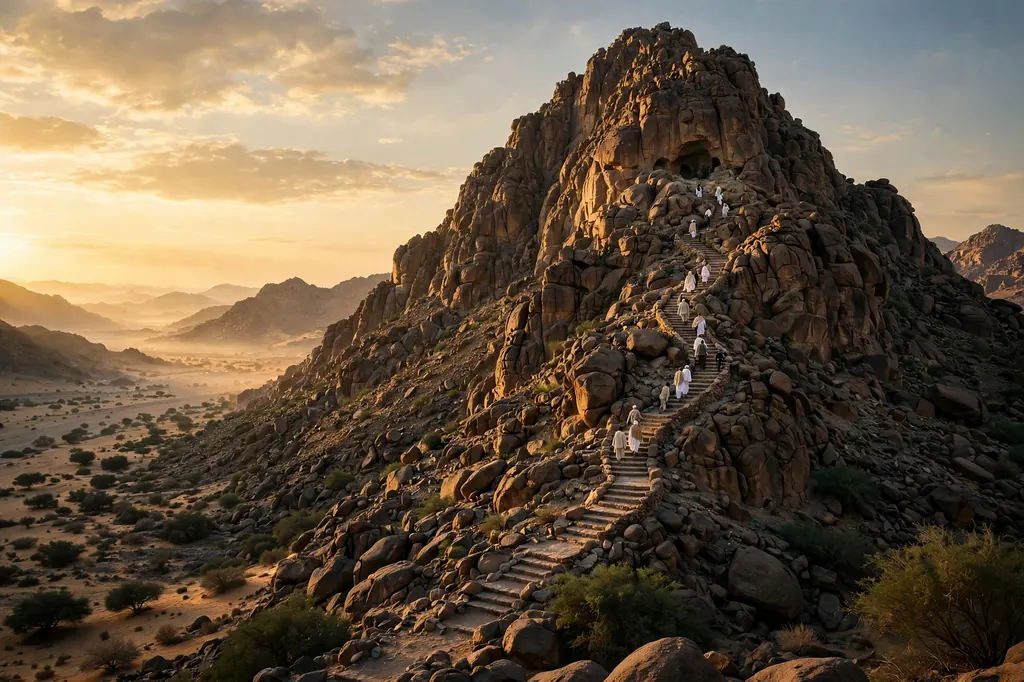
Jabal al-Noor is the Mountain of Light, on the edge of Makkah. Near its peak is Cave Hira, where the Prophet Muhammad (peace be upon him) used to go for quiet reflection, and where the first revelation of the Quran came to him.
The climb is steep, with rocky steps for much of the way. Many pilgrims climb only part of it, and that is fine. There is no prayer or rite attached to climbing. Go early to avoid the heat, wear shoes with good grip, and carry water. Elderly pilgrims and anyone with knee or heart problems should stay at the base and make dua from there.
If you do climb, take it slowly and stop when you need to. There is no reward for pushing yourself until you are exhausted. A short climb, done calmly, is better than a long climb that leaves you tired for the rest of the day. And if you stay at the base, you are not missing the point. The point is to remember what happened on that mountain, and you can do that just as well from below, with time to think and make dua.
Jabal Thawr
Jabal Thawr is the mountain south of Makkah where the Prophet (peace be upon him) and Abu Bakr (may Allah be pleased with him) sheltered in a cave during the Hijra to Madinah. They stayed hidden there while the Quraysh searched for them, and the cave is remembered as a place of trust in Allah at a moment of great danger.
The climb is harder than Jabal al-Noor, so most groups view the mountain from below and hear its story from the guide. The lesson is simple: when every door seems closed, Allah opens a way.
It is a story that stays with people, because it is about a very human moment. Two men, in hiding, with searchers close by, trusting Allah completely. When your guide tells it at the foot of the mountain, listen for that part. It is easy to hear the history and miss the feeling behind it, and the feeling is what most pilgrims carry home with them.
Jannat al-Mualla
Jannat al-Mualla is the historic cemetery of Makkah, close to Masjid al-Haram. Many of the Prophet’s family members are buried here, including his first wife Khadijah (may Allah be pleased with her).
Visit with respect and quiet. This is a graveyard, not a sightseeing stop. Make dua for the deceased, keep your voice low, and follow your guide about where visitors may stand.
Keep your phone silent here, and keep your hands free if you can. A short, sincere dua is enough. You do not need long words. Remembering Khadijah (may Allah be pleased with her), her support for the Prophet (peace be upon him), and her place in early Islam, is itself a way to honour the visit.
Masjid Aisha (Taneem)
Masjid Aisha, also known as Masjid Taneem, is the nearest miqat to Makkah. Pilgrims who are already in Makkah and wish to perform another Umrah go to this mosque, enter Ihram there, and return to the Haram.
Your group may stop here if anyone wants to perform a second Umrah. If you plan to do so, bring your Ihram clothing and confirm the timing with your guide.
If a second Umrah is on your mind, talk to your guide the day before, not at the last minute. That way you know when the bus will stop, what to bring, and how much time you will have. Keep your Ihram ready in your bag, so you are not searching for it when the group is ready to move. A little planning here saves a lot of stress on the day.
Mina, Arafat and Muzdalifah
These three valleys are famous as the sites of Hajj, and they are part of the Makkah Ziyarat tour. Mina is the valley of tents where pilgrims stay during Hajj. Arafat is the plain where pilgrims stand on the Day of Arafat, the most important day of Hajj. Muzdalifah is the open ground between Mina and Arafat where pilgrims spend the night after Arafat.
Outside the Hajj season these places are quiet, which makes them good for reflection. Your guide will point out the key locations, including the Jamarat pillars in Mina, and explain what happens at each place during Hajj.
When you stand in these open places, try to picture them full, because that is how most pilgrims know them from pictures and stories. Then notice how quiet they are now, and how much space there is to think. That contrast is part of the visit. It gives you a sense of the scale of Hajj, and it gives you room to reflect on your own Umrah, and on what you want to take home from it.
Ziyarat in Madinah
Madinah’s Ziyarat is centred on Masjid an-Nabawi and the historic sites around the city. Most groups spend one full day on Ziyarat in Madinah, and the pace is gentler than in Makkah because the sites are closer together.
That gentler pace suits Madinah. The city feels calmer, the sites are close, and there is more time to sit, pray and think between stops. Use that time. You do not need to fill every minute with talk or photos. Some of the best moments on a Madinah Ziyarat day are the quiet ones, a few minutes in a mosque, or a short walk with your family after the guide has finished speaking.
Masjid an-Nabawi and the Rawdah
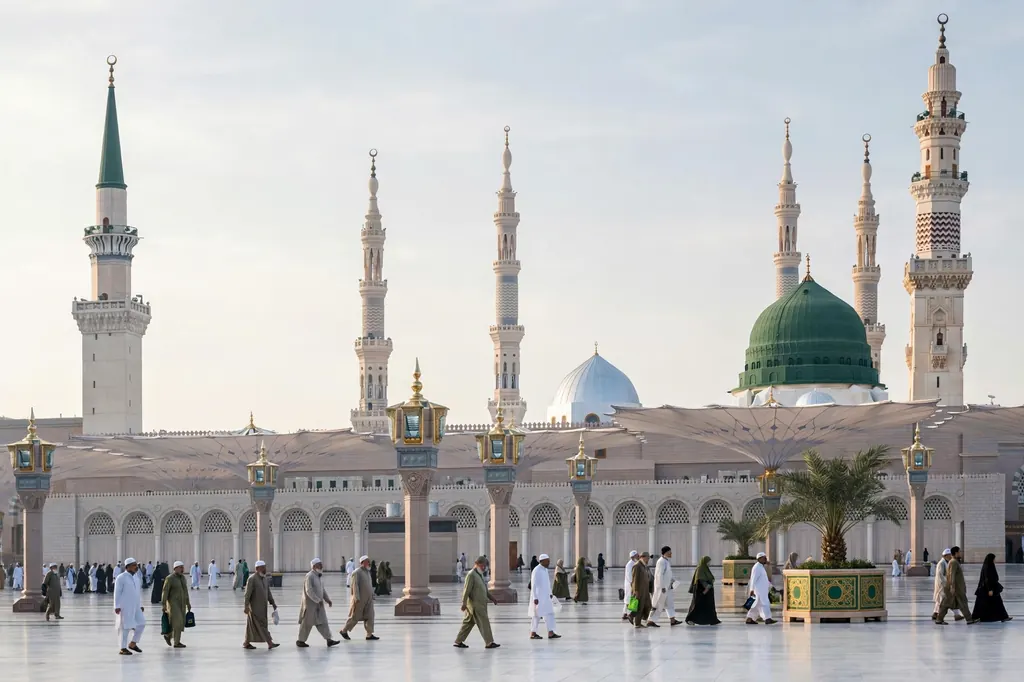
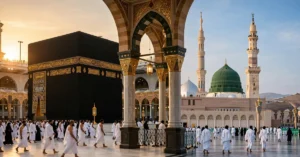
Masjid an-Nabawi, the Prophet’s Mosque, is the heart of Madinah and the second holiest mosque in Islam. The Prophet (peace be upon him) is buried here, in the chamber beside the mosque.
Inside the mosque is the Rawdah, the area between the Prophet’s house and his minbar. The Prophet (peace be upon him) described it as one of the gardens of Paradise. Praying there is something every pilgrim hopes for, and it is often the most memorable moment of the whole trip.
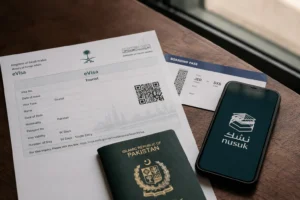
Visiting the Rawdah needs a permit, which you book through the Nusuk platform (nusuk.sa). Book your slot early, because places fill fast. Arrive at your booked time, follow the mosque staff’s instructions, and keep your visit calm. Men and women have separate times and entrances, so check your slot details before you go.
Also make time to send salutations (salam) at the Prophet’s grave. Stand respectfully, speak quietly, and move on when you have finished so others can also pay their respects.
Before your Rawdah slot, it helps to know what you want to pray for. Many pilgrims write a short list beforehand, for family, for health, for guidance, for loved ones who could not travel. You do not need a long list. A few sincere duas, made calmly, are better than trying to remember everything in the moment. Arrive a little early if you can, keep your phone away, and let yourself be present for the short time you have there.
Jannat al-Baqi
Jannat al-Baqi is the historic cemetery of Madinah, next to Masjid an-Nabawi. Many of the Prophet’s family members and companions are buried here, including his wives and his son Ibrahim, and the third Caliph Uthman (may Allah be pleased with them all).
The cemetery is a place for reflection and dua. Entry is restricted for women, so women usually view it from outside the boundary wall. Men may enter during the set visiting times. Keep your voice low, do not step on graves, and do not take photographs inside.
If you are visiting as a family, agree beforehand where you will meet after, so no one is left waiting or searching in a crowd. A short visit, done with respect, is enough. Make dua for those buried there, and for your own family, and then move on quietly with your group.
Masjid Quba
Masjid Quba is the first mosque built in Islam, on the outskirts of Madinah. The Prophet (peace be upon him) helped lay its first stones when he arrived in Madinah, and he used to visit it on Saturdays.
There is a special reward attached to praying two rakahs in Masjid Quba, which the Prophet (peace be upon him) described as equal to the reward of an Umrah. Most tours stop here in the morning, when the mosque is quiet.
Morning is a good time for Quba, because the mosque is calm and you can pray without rushing. Take a few minutes after your two rakahs to sit and make dua. That quiet time is part of the visit, not an extra. Many pilgrims say Quba is one of the stops they remember most, not because it is large or busy, but because it feels peaceful.
Masjid Qiblatain
Masjid Qiblatain is the Mosque of the Two Qiblas, where the direction of prayer (Qibla) was changed from Jerusalem to Makkah while the Prophet (peace be upon him) and his companions were praying. The mosque once had two prayer niches, one facing each direction.
The visit here is short, but the story matters. It reminds you that the early Muslims followed each new command without delay.
Think about that for a moment when you are there. A command came in the middle of prayer, and the whole congregation turned. No debate, no delay. It is a simple story, and it is a powerful one, because it shows how quickly the early Muslims trusted and obeyed. That is the lesson most guides want you to take away from this stop.
Uhud and the Martyrs
Mount Uhud is where the Battle of Uhud took place. The Muslim army faced a larger force, and many companions were martyred, including Hamza (may Allah be pleased with him), the uncle of the Prophet (peace be upon him).
At the foot of the mountain is the graveyard of the martyrs of Uhud. Visitors stop here to make dua for them and to hear the story of the battle, including the lesson about following the Prophet’s instructions.
The lesson from Uhud is one to hear carefully. It is not just a battle story. It is about what happens when instructions are not followed, even with good intentions. Your guide will explain it at the site, and it is worth listening to the whole story, not just the ending. Make dua for Hamza (may Allah be pleased with him) and the other martyrs, and take a quiet minute at the graveyard before the group moves on.
The Trench (Khandaq) and Masjid al-Jumu’ah
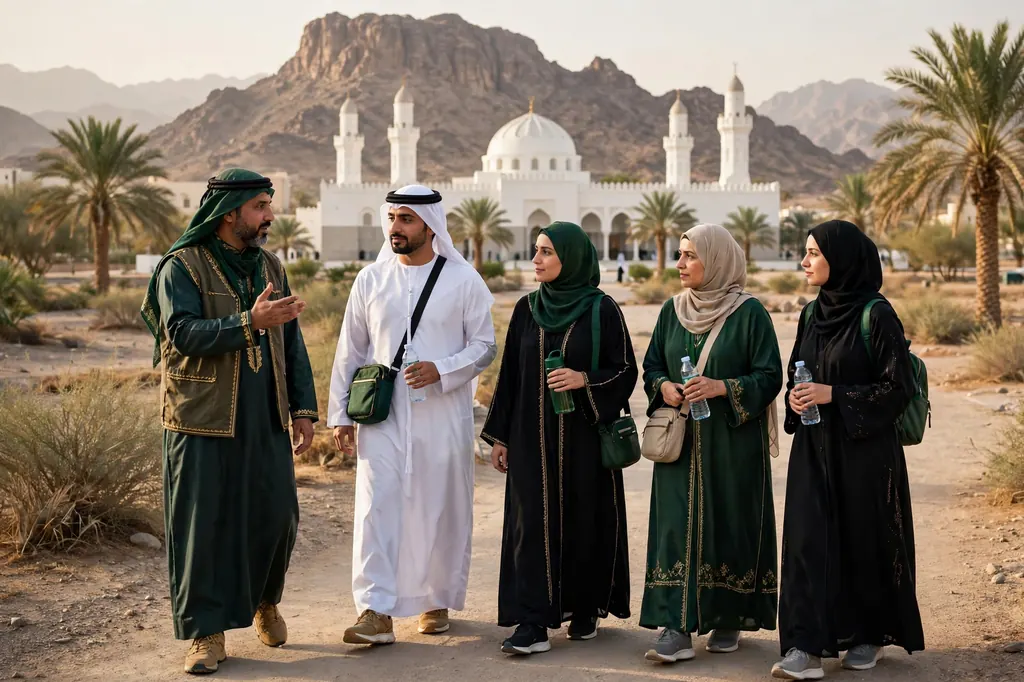
The Trench, known as Khandaq, is where the Muslims dug a defensive trench around Madinah during the Battle of the Trench. It stopped the attacking army, and the siege ended without a battle in the city.
Nearby is Masjid al-Jumu’ah, where the Prophet (peace be upon him) led the first Friday prayer (Jumu’ah) in Madinah on his way from Quba to the city. It is a small, quiet mosque, and a fitting stop for reflection.
These two stops go well together, because one is about planning and effort, and the other is about prayer and community. The trench was hard work, dug by hand, with a clear purpose. The mosque is small and calm, a place to pause after hearing that story. If you have time, sit for a few minutes in Masjid al-Jumu’ah. It is a good place to gather your thoughts before the tour moves on.
Etiquette for Makkah and Madinah Ziyarat
Makkah and Madinah Ziyarat visits go well when everyone follows a few simple rules.
These rules are not about being strict for the sake of it. They are about respect, for the places, for the people buried there, and for the other pilgrims around you. When everyone follows them, the whole group moves smoothly, and each stop feels calm instead of rushed.
Rules for Makkah and Madinah Ziyarat
- Dress modestly and keep your head covered where required. Wear clothes that are comfortable for walking and for the heat.
- Remove your shoes before entering mosques, and keep them in the bag or rack provided. Do not leave shoes blocking walkways.
- Keep your voice low in mosques and cemeteries. These are places of worship and rest, not places for loud conversation or phone calls.
- Do not take photographs inside mosques and cemeteries unless your guide says it is allowed.
- Follow your guide’s timing. Groups move together, and one person who wanders off can delay the whole bus.
- Do not touch or kiss walls, railings or graves. Respect for the site means keeping a proper distance.
- Make dua and pray, but do not turn any site into a place of worship beyond what is allowed. If you are unsure about something, ask your guide.
If you are unsure at any stop, watch what your guide does, and ask a short question. It is better to ask than to guess. Guides are used to these questions, and a quick answer at the site is more useful than worrying about it later.
Practical Tips for UAE Pilgrims
A little preparation makes Makkah and Madinah Ziyarat much easier.
Think of this section as a checklist you can run through the night before a Ziyarat day. Shoes, water, documents, medicines, and your plan for the group. If those five things are sorted, the day itself is much simpler.
What to Pack for Makkah and Madinah Ziyarat
Shoes and walking. You will walk a lot, and some sites have uneven ground. Bring comfortable shoes with good grip, and a small bag to carry them when you enter mosques. Break in new shoes before you travel, if you can. A pair that feels fine for an hour at home can feel very different after a full day of walking, so comfort matters more than looks here.
Water and sun. Makkah and Madinah are hot for most of the year. Carry a water bottle, wear sunscreen, and drink water often, even if you do not feel thirsty. Fill your bottle when you get a chance, and keep it in your hand or in a small bag, not buried at the bottom of a larger bag where you will not reach for it.
On Your Makkah and Madinah Ziyarat Day
Timing. Ziyarat tours usually run in the morning or late afternoon to avoid the midday heat. Be at the bus on time, and climb Jabal al-Noor early in the day if you plan to go up. Being five minutes early is better than being five minutes late, because the bus cannot wait for everyone, and a late start can shorten the time at the first stop.
Money and documents. Carry a small amount of cash in Saudi riyals for drinks and small purchases, and keep your passport and phone safe in a closed bag. Your Umrah visa is valid for 30 days from the date of issue under the 2026 rule, and your passport must be valid for at least 6 months, so check both before you travel. Check them again the night before you fly, so a simple expiry date does not become a problem at the airport.
Elderly pilgrims and children. Most sites are suitable for elderly pilgrims if they take their time and skip the mountain climbs. Bring any medicines you need, and let your guide know about any health issue. Children can join the tours, but keep them close in crowded areas. If an elderly family member needs a rest, tell the guide. It is better to rest for a few minutes at one stop than to struggle through the whole day.
Booking your trip. Bookings close 10 days before departure, and a 50 percent down payment is needed to confirm your place. If you want to travel on a particular date, book early, because the popular departures fill up first. Once your place is confirmed, keep your booking details in one place, on your phone and on paper if you like, so you can check dates and times without searching through messages.
How Makkah and Madinah Ziyarat Is Included in UAE Umrah Packages
Makkah and Madinah Ziyarat is included in the Umrah packages offered from the UAE, so you do not need to arrange it yourself.
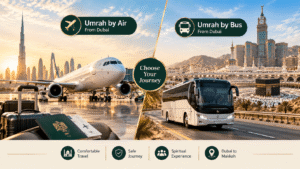
The Umrah package by bus starts from AED 1,200 per person on quad sharing. It covers 6 days in Makkah and 2 days in Madinah, and includes visa support, 3-star accommodation, luxury bus transport, border tax, Ziyarat with an Urdu and Arabic speaking guide, and free Ihram.
The Umrah package by air from Dubai starts from AED 2,700 per person on quad sharing in economy, with no breakfast. It covers 3 nights in Makkah and 2 nights in Madinah, with a direct flight every Tuesday. Flights are FZ829 from Dubai to Jeddah (14:40 to 16:45) and FZ898 from Madinah to Dubai (17:15 to 21:00). The package includes visa support and application guidance, a return airline ticket, transfer in KSA, an Umrah lecture, the Haramain train journey, an experienced guide, Jumu’a at Makkah, a holy places visit, and Zam Zam water.
Packages run from Dubai, Sharjah, Abu Dhabi and Ajman, and you can see the full list on the Umrah packages page. Your guide travels with the group and handles the Ziyarat visits in both cities, so all you need to do is show up on time and enjoy the experience.
Choosing between bus and air is mostly about time and comfort. The bus package gives you more days, 6 days in Makkah and 2 days in Madinah, with the journey itself as part of the experience. The air package is shorter, 3 nights in Makkah and 2 nights in Madinah, with a direct flight every Tuesday. Both include Ziyarat with a guide, so whichever you choose, the holy places visit is already arranged for you.
Frequently Asked Questions
1. What is Ziyarat during Umrah?
Ziyarat is the visit to the holy and historic sites of Makkah and Madinah, such as Cave Hira, Mount Uhud and Masjid Quba. It is not part of the Umrah rites, but it is a recommended part of the journey, and most UAE packages include guided Ziyarat tours in both cities.
2. Is Ziyarat included in Umrah packages from the UAE?
Yes. UAE Umrah packages by bus and by air include a holy places visit with an experienced guide. The bus package from AED 1,200 and the air package from AED 2,700 both include Ziyarat, along with visa support, accommodation and transport.
3. How long does Ziyarat take in Makkah and Madinah?
Ziyarat is usually arranged as a guided tour on one of your days in each city, with time for prayer and reflection at each stop.
4. Do I need a permit to visit the Rawdah?
Yes. You need a Rawdah permit, which you book through the Nusuk platform (nusuk.sa). Book your slot early, because places fill fast, especially in busy weeks. Men and women have separate visiting times and entrances.
5. Can women visit Jannat al-Baqi and Uhud?
Women can visit most Ziyarat sites, including Uhud and the mosques. Entry to Jannat al-Baqi cemetery is restricted for women, so they usually view it from outside the boundary wall. Men may enter during the set visiting times.
6. What should I wear and carry for Ziyarat?
Wear modest, comfortable clothes and shoes with good grip. Carry a water bottle, sunscreen and a small bag for your shoes when you enter mosques. Bring your Ihram clothing if your group plans a stop at Masjid Aisha for a second Umrah.
7. Can I do Ziyarat on my own, or only with the group?
Both. The guided group tour is included in your package and covers the main sites. In your free time you can also visit nearby sites on your own. Check the timings with your guide first.
8. Is Ziyarat compulsory for Umrah?
No, Ziyarat is not compulsory for Umrah. Umrah is complete after Ihram, Tawaf, Sa’i and shaving or trimming the hair. Ziyarat is a recommended visit to historic places in Makkah and Madinah, not a rite of Umrah. Most pilgrims still choose it because it adds history, reflection and structure to free time between prayers.
9. What are the main Ziyarat places in Makkah?
The main Ziyarat places in Makkah are Jabal al-Noor and Cave Hira, Jabal Thawr, Jannat al-Mualla, Masjid Aisha at Taneem, Masjid al-Jinn, and the Hajj sites of Mina, Arafat and Muzdalifah. Most groups cover them in one guided tour of about three to four hours. Masjid al-Haram remains the centre of worship in Makkah.
10. What are the main Ziyarat places in Madinah?
The main Ziyarat places in Madinah are Masjid an-Nabawi and the Rawdah, Jannat al-Baqi, Masjid Quba, Masjid Qiblatain, Mount Uhud and the martyrs cemetery, the Seven Mosques at Khandaq, and Masjid al-Jumuah. Most groups cover the main sites in about two to three hours. Masjid an-Nabawi is the centre of the Madinah visit.
11. How many days are needed for Ziyarat in Makkah and Madinah?
Two days are enough for the main Ziyarat tours, one day in Makkah and one day in Madinah, if transport and timings allow. Three to five days give a calmer plan, with time for prayer, rest and nearby sites. A longer stay suits elderly pilgrims and families. Ziyarat itself is a day tour in each city, not a full week.
12. How do I book a Rawdah permit on Nusuk?
Download the official Nusuk app, create an account with your passport and visa details, then open the Rawdah booking section and choose men or women. Pick an available date and time slot, confirm the booking, and save the QR code. Slots are usually released about seven to fourteen days before the visit, so check the app early and often.
Plan Your Umrah with Ziyarat Included
Ziyarat turns a good Umrah into a complete journey. You walk where history happened and return home with memories that stay with you for life.
That is what most pilgrims talk about when they get home, not the bus or the hotel, but the places they visited and the stories they heard. A morning at Quba, a prayer in the Rawdah, a quiet moment at Uhud. Those are the memories that last, and they are the reason Ziyarat is worth planning properly.
Book your Umrah from the UAE with Ziyarat, an experienced guide and full visa support included. Message us on WhatsApp at https://wa.me/971567044355 or see all packages at https://uaeumrah.com/umrah-packages/.
Follow UAE Umrah & Travels: Facebook | LinkedIn | Google Maps | Trustpilot


One Response