Introduction
Performing Umrah is one of the most meaningful journeys a Muslim can make. If this is your first time, it is normal to feel a mix of excitement and nerves. For pilgrims travelling from the UAE, the trip is short and well organised, but you will still have questions. What do I wear? Where do I start? What do I recite? How do I perform Umrah step by step for the first time? This guide explains how to perform Umrah step by step for first-time pilgrims from the UAE.
This guide goes through every step with you, in order, from entering Ihram to leaving it, with practical tips for UAE pilgrims and the common mistakes to avoid. It is written for first time pilgrims from Dubai, Sharjah, Abu Dhabi and Ajman, in clear simple English, so you can read it on the plane and use it in the Haram.
Umrah is voluntary, and it can be performed at almost any time of year. Its rites take only a few hours. Hajj is different. Hajj is obligatory for Muslims who are able, it takes place only on fixed dates, and it lasts five to six days. Umrah does not replace Hajj, but it is a complete act of worship on its own, and many UAE pilgrims perform it more than once in a lifetime.
Read the at a glance table first, then read each step in order. If you only remember one thing, remember the order: Ihram, Tawaf, Sa’i, then hair cutting. Keep that order, stay with your group, and ask your group guide when you are unsure.
Umrah at a Glance: The Four Rites in Order
| Order | Rite | What you do | Where |
|---|---|---|---|
| 1 | Ihram | Make the intention for Umrah and recite Talbiyah | At the miqat, on the plane or bus, as announced by the crew and guide |
| 2 | Tawaf | Walk seven circuits around the Kaaba, keeping it on your left | Masjid al-Haram, Makkah |
| 3 | Sa’i | Walk seven lengths between Safa and Marwah, starting at Safa and finishing at Marwah | Inside Masjid al-Haram, Makkah |
| 4 | Halq or Taqsir | Men shave the head or trim the hair evenly, women trim a fingertip length | Near the Haram, after Sa’i |
After Tawaf, you also pray two rakahs behind Maqam Ibrahim and drink Zamzam water, before you start Sa’i. That prayer and drink are part of the flow between Tawaf and Sa’i, not a separate rite on their own.
The Umrah rites usually take two to four hours in normal crowds. Tawaf takes about one hour, Sa’i takes about 45 minutes to one hour, and the prayer and haircut take only a short time. During Ramadan or peak seasons, the same rites can take five to six hours or more because the Haram is very crowded. Plan for the longer time, and do not rush.
Before You Travel: Documents and Preparation
Get your paperwork right before anything else. Your passport must be valid for at least 6 months. Your UAE residence visa or Emirates ID must be valid for at least 3 months. You also need a meningitis vaccination certificate. These are the standard requirements for an Umrah visa from the UAE.
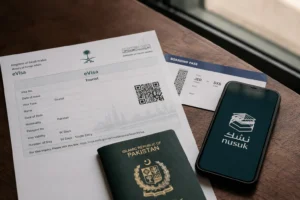
UAE residents need a visa to enter Saudi Arabia for Umrah, while UAE citizens do not need a visa. Residents can apply through the official Nusuk platform or the Saudi eVisa portal, or book a package that includes visa support. The Umrah visa is valid for 30 days from the date of issue under the 2026 rule. Read the full requirements in our Umrah visa guide.
You also need a separate Umrah permit booked through the official Nusuk platform, even if you already hold a visa. The visa lets you enter Saudi Arabia, while the permit lets you perform Umrah at Masjid al-Haram. Book your permit for a set date and time before you travel, because peak times fill up quickly.
Two timing rules matter. Bookings close 10 days before departure, so do not leave it to the last week. A 50 percent down payment is needed to confirm your booking. Once those are done, pack light: your Ihram, comfortable footwear, toiletries, a prayer mat, any medicines you need, and your travel documents in a small bag you can carry with you. For a full list, read our Umrah Packing List from Dubai.
Learn the basics before you go. Read this guide, listen to your Umrah lecture if your package includes one, and ask your guide questions. A little preparation makes the whole journey calmer. If you want more detail on Ihram itself, read our Ihram Guide as well.
Step 1: Enter the State of Ihram

Ihram is both a state and a dress. The state begins with your intention (niyyah) to perform Umrah. The dress for men is two pieces of unstitched white cloth. Women wear their normal modest clothing. If you travel by bus with UAE Umrah, a free Ihram is included in the package.
You enter Ihram at the miqat, the boundary point for pilgrims travelling to Makkah. If you fly from the UAE, this happens on the plane before you land. The cabin crew usually makes an announcement as the flight approaches the miqat, and your group guide will tell you the exact time to make your intention. If you travel by bus, your guide will stop at the miqat so the group can enter Ihram together. Do not worry about the name of the boundary point. Listen for the announcement, follow your guide, and make your intention when they tell you.
It helps to change into your Ihram clothing before the announcement, at home or at the airport, so you are ready when the time comes. Take a shower first if you can, and do not use perfume after you enter Ihram.
Once you have made your intention, start reciting the Talbiyah:
“Labbayk Allahumma Labbayk, Labbayk La Shareeka Laka Labbayk, Innal Hamda Wan Ni’mata Laka Wal Mulk, La Shareeka Lak.”
This means: “Here I am, O Allah, here I am. Here I am, You have no partner, here I am. All praise, grace and dominion belong to You. You have no partner.” Keep reciting it during the journey until you begin Tawaf.
While you are in Ihram, a few rules apply. Do not use perfume or scented products. Do not cut your hair or nails. Men do not cover their heads and do not wear stitched clothing. Women wear modest clothing, keep the face and hands uncovered in Ihram, and must not wear a niqab or gloves. If you are unsure about any rule, ask your group guide or a scholar rather than guessing. These are general rules, and your guide can explain the details for your situation.
Ihram ends only when you cut your hair after Sa’i. Sleeping, showering, eating, and changing your Ihram cloths do not end it. The rules are broken by acts such as using perfume, cutting hair or nails, wearing stitched clothing for men, or covering the head for men. If you think you have broken a rule, tell your guide and ask a scholar what to do next. Do not try to fix it on your own, and do not guess at what to do next.
Step 2: Travel to Makkah
From the UAE you can travel by air or by bus. UAE Umrah runs direct flights every Tuesday: flight FZ829 leaves Dubai (DXB) for Jeddah at 14:40 and arrives at 16:45, and the return flight FZ898 leaves Madinah for Dubai at 17:15 and arrives at 21:00. The air package covers 3 nights in Makkah and 2 nights in Madinah. See the Umrah package by air from Dubai for the current options.
The bus option covers 6 days in Makkah and 2 days in Madinah, with luxury bus transport, 3-star accommodation, Ziyarat, and an Urdu and Arabic speaking guide. Both options include visa support, transfers in Saudi Arabia, and the Haramain train journey. You can compare them on our Umrah packages page.
When you arrive in Makkah, go to your hotel, rest, freshen up, and head to the Haram when you feel ready. There is no need to rush. Drink some water, eat something light, and go with your group. If you arrive tired, rest first and perform Umrah when you feel fresh. A calm Umrah is better than a rushed one.
Keep your phone charged, save your guide’s number, and agree on a meeting point with your group before you enter the Haram. That meeting point matters more than anything else if you get separated later.
Step 3: Tawaf, Seven Circuits Around the Kaaba
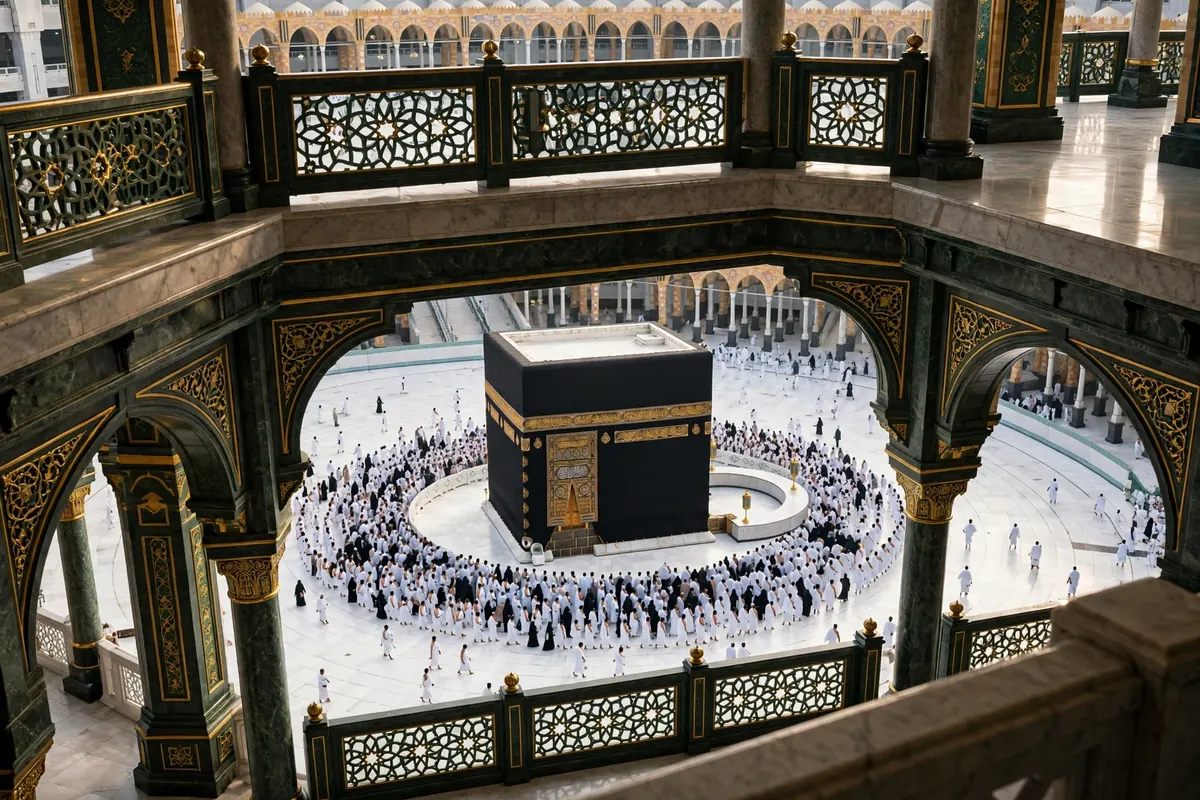
Tawaf is the first rite of Umrah after Ihram. You walk around the Kaaba seven times, keeping it on your left, moving counter-clockwise. Start at the corner where the Black Stone is set. Each complete walk around the Kaaba is one circuit. Men traditionally walk at a brisk pace for the first three circuits.
Tawaf needs wudu, so make wudu before you start. If your wudu breaks during Tawaf, stop and renew it, then resume from where you stopped, not from the beginning, according to the majority view. If you are unsure how many circuits you completed, count the lower number and continue. Ask your group guide or a scholar if you are unsure.
There is no single fixed dua for each circuit. Recite the duas and dhikr you know, read from the Quran, or pray in your own words. Many pilgrims recite short duas they have learned by heart, and that is enough. Do not worry if you do not know long duas. Sincerity matters more than length. See the dua bank later in this guide for the short phrases to use.
A few things make Tawaf easier. Go early in the morning after Fajr or late at night, when the Haram is less crowded and the weather is cooler. Stay hydrated and carry a small bottle of water. Keep your group together and agree on a meeting point before you start, in case anyone gets separated. If you need to rest, step to the side, rest, and continue from where you stopped. The circuits do not have to be rushed.
Do not push others to reach the Black Stone. You can start Tawaf by facing the Black Stone corner and saying Bismillah Allahu Akbar, without touching it. The crowd near the stone is often heavy, and your safety and the safety of others come first.
Tawaf counting aid: 1 to 7
| Circuit | Start | Finish | What to remember |
|---|---|---|---|
| 1 | Black Stone corner | Black Stone corner | Face the stone, say Bismillah Allahu Akbar, keep the Kaaba on your left |
| 2 | Black Stone corner | Black Stone corner | Keep a steady pace, recite dhikr or personal dua |
| 3 | Black Stone corner | Black Stone corner | Men walk briskly for the first three circuits, if able |
| 4 | Black Stone corner | Black Stone corner | If you lose count, take the lower number you are sure of |
| 5 | Black Stone corner | Black Stone corner | Drink water only if you need to, then continue |
| 6 | Black Stone corner | Black Stone corner | Stay with your group, or agree a meeting point |
| 7 | Black Stone corner | Black Stone corner | After this circuit, Tawaf is complete, go to Maqam Ibrahim |
Use a simple count on your fingers, or count with prayer beads, or ask a family member to count with you. Do not rely on memory alone in a crowd. If you lose count, take the lower number you are sure of, and continue from there. That is the safe approach used by most guides.
Step 4: Pray Behind Maqam Ibrahim and Drink Zam Zam
After you finish the seven circuits, pray two rakahs behind Maqam Ibrahim, the stone where Prophet Ibrahim (peace be upon him) stood while building the Kaaba. If the area right behind it is crowded, you can pray anywhere in the Haram. The prayer is the same two rakahs.
Then drink Zam Zam water. You will find Zam Zam water stations throughout the Haram. Drink your fill and make dua. Zam Zam water is also included in the air package, so you can take some home with you.
Take a short rest after this prayer if you need it. Sa’i comes next, and you will walk again, so drink water and catch your breath before you start.
Step 5: Sa’i Between Safa and Marwah
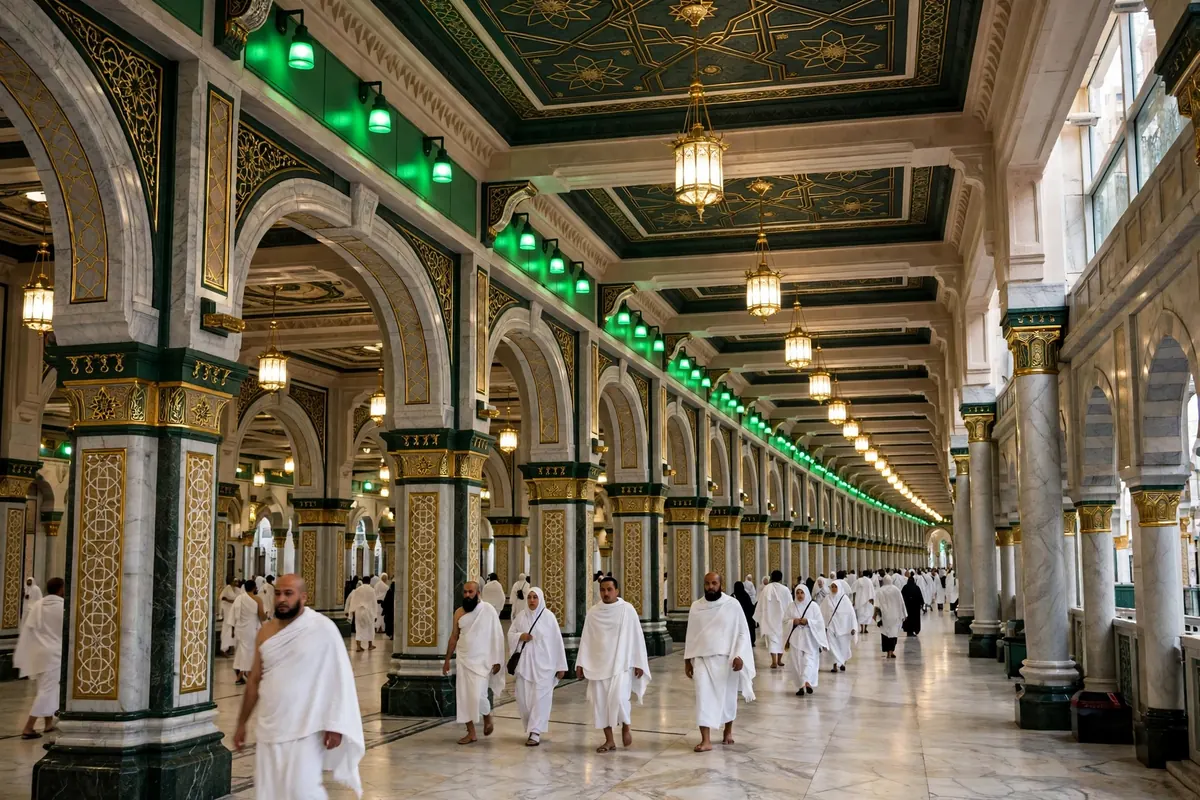
After Tawaf and the prayer, you perform Sa’i. Walk from the hill of Safa to the hill of Marwah and back, seven lengths in total. You start at Safa and finish at Marwah. This rite remembers the search of Hajar (peace be upon her) for water for her son Ismail, and it ends at the place where the Zam Zam spring appeared.
Sa’i does not need wudu, so you can continue Sa’i after renewing wudu if you need to. As you walk, recite duas and dhikr, just as in Tawaf. Men walk briskly between the two green markers if able. Women walk at a normal pace throughout. The walk is indoors, air-conditioned, and flat, so take it at a comfortable pace. Wear comfortable footwear, because by now you have already walked a lot. Drink water before you start and again when you finish.
At Safa, recite: Innas-Safa wal-Marwata min sha’a’irillah. That is the verse reference given in the research for this guide, and your guide can explain its meaning to you. Make personal dua at Safa and at Marwah, and keep walking calmly between them.
Sa’i counting aid: 1 to 7
| Length | From | To | What to remember |
|---|---|---|---|
| 1 | Safa | Marwah | Start at Safa, this is length 1 |
| 2 | Marwah | Safa | Marwah back to Safa is length 2 |
| 3 | Safa | Marwah | Men walk briskly between the green markers, if able |
| 4 | Marwah | Safa | Women walk at a normal pace throughout |
| 5 | Safa | Marwah | If you lose count, take the lower number you are sure of |
| 6 | Marwah | Safa | Rest briefly if you need to, then continue |
| 7 | Safa | Marwah | The seventh length ends at Marwah, Sa’i is complete |
Remember the key point: Safa to Marwah counts as one lap, and Marwah back to Safa counts as the second. You finish at Marwah, not at Safa. If you realise you started at the wrong hill, stop, tell your guide, and follow their advice on how to restart correctly. Do not guess, and do not try to fix the count on your own.
Step 6: Halq or Taqsir, Leaving Ihram
The last rite is Halq or Taqsir. Men either shave their head completely (Halq) or trim all of their hair evenly (Taqsir). Shaving the head is considered the more complete option for men. Women trim about a fingertip length from the ends of their hair, in private. Barbers are available near the Haram, and your guide can point you to one.
As soon as this is done, you leave the state of Ihram and your Umrah is complete. The restrictions of Ihram no longer apply. You can change into your normal clothes, use perfume, and rest.
Do not cut your hair before Sa’i is finished. If you cut too early by mistake, tell your guide and ask a scholar what to do next. The order matters: Ihram, Tawaf, Sa’i, then hair cutting.
Dua Bank: Short Phrases to Use, in Order
You do not need a long list of duas for Umrah. Use these short phrases, which are the verified phrases in the research for this guide, and add your own personal duas in your own words.
After Ihram, until Tawaf begins: Talbiyah
“Labbayk Allahumma Labbayk, Labbayk La Shareeka Laka Labbayk, Innal Hamda Wan Ni’mata Laka Wal Mulk, La Shareeka Lak.”
Meaning: “Here I am, O Allah, here I am. Here I am, You have no partner, here I am. All praise, grace and dominion belong to You. You have no partner.”
At the start of Tawaf, at the Black Stone corner: Say Bismillah Allahu Akbar, facing the Black Stone corner. You do not need to touch the stone.
During Tawaf, between the Yemeni Corner and the Black Stone: Recite: Rabbana atina fid-dunya hasanah wa fil-akhirati hasanah wa qina adhaban-nar. This is the phrase given in the research for that part of Tawaf. During the rest of Tawaf, recite Quran, dhikr, or personal duas. There is no fixed dua for every circuit.
At Safa, at the start of Sa’i: Recite: Innas-Safa wal-Marwata min sha’a’irillah. Your guide can explain its meaning to you. During Sa’i, recite dhikr or personal duas, just as in Tawaf.
Personal dua prompts: At each step, make dua in your own words for yourself, your family, your parents, and your loved ones. Ask for forgiveness, for health, for guidance, and for an accepted Umrah. A short sincere dua is better than a long dua said without attention. If you want the wording for any other moment checked, ask your group guide or a scholar before you use it. Do not use wording from an unverified website if you are unsure.
Umrah for Women: Dress, Ihram, Mahram and Menstruation
Women have no special Ihram garment. They wear loose, modest clothing that covers the whole body except the face and hands, in any colour. White is common but not required. In Ihram, women must not wear a niqab or gloves, because the face and hands stay uncovered. They may lower a scarf over the face if unrelated men are nearby. Ask your group guide if you are unsure about this in a crowd.
For hair trimming, women trim about a fingertip length from the ends of their hair, in private, after Sa’i. Women do not shave their heads. Do the trimming in your hotel room or in a private place, not in the Haram.
Under current Saudi rules, women can perform Umrah without a mahram, and many travel in an organised group for safety and comfort. The Saudi visa does not depend on having a mahram. Scholars differ on the religious ruling, so some families still prefer a mahram. Check the current Saudi rule and ask a scholar about your own situation before booking. This guide does not settle that question for you, it only tells you what the current travel rule is.
A woman can enter Ihram during menstruation and make her intention at the miqat. She can recite Talbiyah, dhikr, and duas, but she must not perform Tawaf until her period ends and she has taken ghusl. Tawaf needs ritual purity. Once she is pure, she completes Tawaf, prays two rakahs, performs Sa’i, and cuts her hair to finish Umrah. If your period starts during the trip, tell your group guide, stay in Ihram, wait, and do not perform Tawaf until you are pure. Ask a scholar about your own case if you are unsure, and do not rush the rites.
Women should also plan for prayer areas and toilets in the Haram, carry a small bag with water and tissues, and stay with the group in crowded times. Early morning and late night Tawaf are calmer, and that helps women travelling with children as well.
When Things Go Wrong: What to Do First
Most first timers worry about making a mistake. Here is what to do in the most common cases. In every case, the first step is the same: stay calm, stop, and ask your group guide or a scholar. Do not guess at a ruling, and do not try to fix it on your own.
You lose count in Tawaf or Sa’i. Take the lower number you are sure of, and continue from there. Use fingers or prayer beads next time, or ask a family member to count with you. Do not restart from the beginning unless your guide tells you to.
Your wudu breaks during Tawaf. Tawaf needs wudu, so stop and renew it. Then resume from where you stopped, not from the beginning, according to the majority view. Sa’i does not need wudu, so you can continue Sa’i after renewing wudu. If you are unsure how many circuits you completed, count the lower number and continue.
You cross the miqat without Ihram. Tell your group guide as soon as you realise it. Do not try to fix it on your own. Your guide will tell you what to do next, and will ask a scholar if needed. This guide does not give a ruling for this case, because that needs a scholar’s answer for your own situation.
You start Sa’i at the wrong hill. Stop, tell your guide, and follow their advice on how to restart correctly. Remember the correct order: start at Safa, finish at Marwah, seven lengths in total.
You cut your hair too early. Tell your guide and ask a scholar what to do next. Do not cut more hair, and do not assume the Umrah is finished. The order is Ihram, Tawaf, Sa’i, then hair cutting.
You feel ill during the rites. Stop, rest, drink water, and tell your guide. You can rest during Tawaf and Sa’i and continue when you feel better. If you need medical help, ask Haram staff or your guide at once. Your health comes first.
You get separated from your group. Stay calm and go to the meeting point you agreed before you started Tawaf or Sa’i. Do not keep walking in the crowd looking for your group. Call your guide on the number you saved before you began. If you cannot reach your guide, wait at the meeting point or ask Haram staff for help.
Children, Elderly Pilgrims and Mobility
Children can join Umrah, but keep them close in crowded areas, especially during Tawaf and in the Sa’i area. Give each child water and a hat, keep the day short for younger children, and agree on a meeting point if an older child walks ahead. If a child is tired, it is better to rest in the hotel or in a quiet part of the Haram than to push through every rite in one go. Ask your guide about documents and arrangements for children before you travel, because rules can change.
Elderly pilgrims should take their time, skip the brisk pace in Tawaf and Sa’i, and rest when they need to. The upper floors of the Haram are often calmer than the ground floor, and they give more space to walk. Bring any medicines you need, carry water, and let your guide know about any health issue before the rites start. If you have knee or heart problems, tell your guide in advance, so the group plan can allow extra time.
For mobility, wheelchair routes exist in the Haram, and your guide and Haram staff can point you to them. Do not invent a booking or a route on your own. Ask at the Haram or ask your guide on the day, and allow extra time for Tawaf and Sa’i. Rest points are available inside the Haram, and water stations are throughout the building. Take breaks, drink water, and do not try to finish the rites in one rush if you need to rest.
What to Do After Umrah
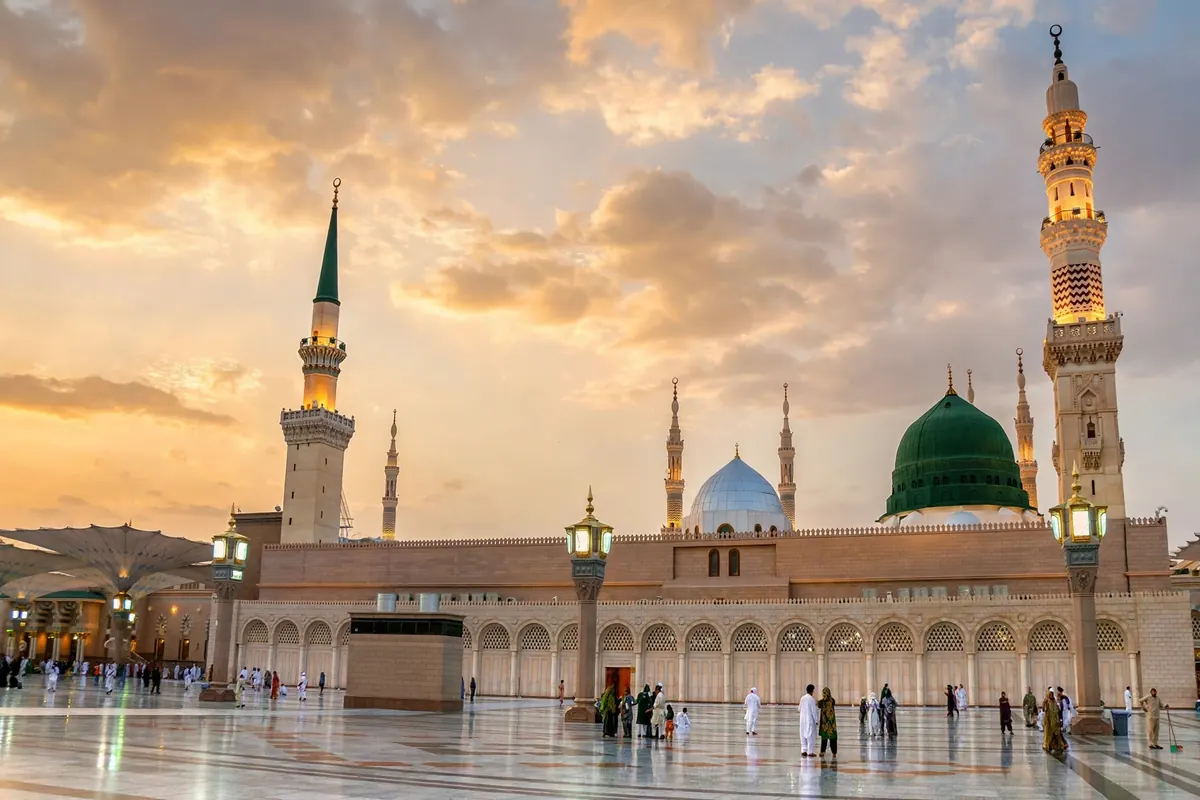
After Umrah, spend time in the Haram in prayer and reflection. Most UAE packages then take you to Madinah, where you can pray at Masjid an-Nabawi and visit the holy places. Use this time for worship, rest, and Ziyarat. You can also perform another Umrah in the same trip if your guide arranges it.
In Madinah, the most asked about visit is the Rawdah inside Masjid an-Nabawi. You need a permit to visit the Rawdah, booked through the official Nusuk platform. Book early, because slots fill fast, especially in busy weeks. Men and women have separate visiting times and entrances, so check your slot details before you go. For a full list of Madinah sites, read our Makkah and Madinah Ziyarat Guide.
You can perform more than one Umrah in a single trip. There is no set limit on how many times you can perform Umrah. Many pilgrims perform a second Umrah for a loved one. Each Umrah needs a fresh Ihram, starting from a miqat, so ask your group guide about the arrangements and timing before you plan another one. Do not assume a second Umrah is part of every tour. Ask the day before, so the guide can plan it around prayer times.
Voluntary Tawaf is also possible after your Umrah is complete, when you have free time in the Haram. Use that time for prayer, for reading Quran, and for dua, rather than adding more rites in a rush. If you are leaving Makkah, ask your guide about the farewell Tawaf and what is expected before travel, because guidance can differ. Do not treat it as a settled rule in this guide.
The air package includes 2 nights in Madinah, the Haramain train journey, a holy places visit, and Jumu’a at Makkah. The bus package includes Ziyarat and 2 days in Madinah. Use that Madinah time well, pray, rest, and visit the places with your guide.
Common Mistakes First-Timers Make
Leaving documents to the last minute. Check your passport and residence visa validity weeks before you travel. Remember that bookings close 10 days before departure.
Not drinking enough water. Makkah is hot, and Tawaf and Sa’i involve a lot of walking. Drink water often, not only when you feel thirsty.
Rushing through the rites. Tawaf and Sa’i are acts of worship, not a race. Take your time, especially on your first Umrah.
Getting separated from the group. Always agree on a meeting point before you start Tawaf or Sa’i, and save your guide’s phone number in your phone.
Wearing new or uncomfortable shoes. Break in your footwear before the trip. You will walk far more than on a normal day.
Overpacking. You need far less than you think. Pack light and leave room in your bag for Zam Zam water and gifts on the way home. Read our Umrah Packing List from Dubai before you pack.
Not learning the basics before you go. Read this guide, listen to your Umrah lecture if your package includes one, and ask your guide questions. A little preparation makes the whole journey calmer.
Using scented products in Ihram. Do not use perfume, scented soap, or scented wipes after you enter Ihram. Check your toiletries before you travel, and keep unscented items in your bag.
Miscounting Tawaf or Sa’i. Count with fingers or beads, and remember that Sa’i finishes at Marwah, not at Safa. If you lose count, take the lower number you are sure of.
Practical Tips for UAE Pilgrims
Best times of day. Early morning after Fajr and late at night are the quietest times for Tawaf. Avoid the hottest midday hours when you can, and avoid peak times such as Friday prayers and Ramadan nights if you want a calmer Tawaf.
Stay hydrated. Carry a small water bottle and refill it at the Zam Zam stations. Drink regularly through the day.
Keep your group together. Travel with your group, keep your guide’s number saved, and agree on a meeting point at every stop.
Look after your feet. Comfortable footwear, socks for the marble floors, and a small bag for your shoes inside the Haram.
Keep your phone charged. A power bank is useful. Your phone holds your documents, your guide’s number, and your hotel details.
Choose the right package. A bus package starts from AED 1,200 per person (quad sharing) and an air package starts from AED 2,700 per person (quad sharing, economy). Both include visa support. Compare the options in our guide to cheap Umrah packages from the UAE or look at Umrah packages from Dubai for the Tuesday departures. For help on when to travel, read our Best Time to Perform Umrah guide.
Frequently Asked Questions
1. What are the steps to perform Umrah?
Umrah has four main rites in order. First, enter Ihram at the miqat with intention and recite Talbiyah. Second, perform Tawaf, seven circuits around the Kaaba. Third, pray two rakahs behind Maqam Ibrahim and drink Zamzam water. Fourth, perform Sa’i, seven walks between Safa and Marwah. Finally, cut or shave hair to exit Ihram.
2. How long does it take to perform Umrah?
The Umrah rites usually take two to four hours in normal crowds. Tawaf takes about one hour, Sa’i takes about 45 minutes to one hour, and the prayer and haircut take only a short time. During Ramadan or peak seasons, the same rites can take five to six hours or more because the Haram is very crowded.
3. What is Ihram and how do you enter it?
Ihram is the sacred state a pilgrim enters before Umrah, not only the clothing. You enter it at the miqat by making the intention for Umrah and reciting Talbiyah. Men wear two unstitched white cloths, and women wear normal modest clothing. Once you enter Ihram, its rules apply until you finish Umrah and cut your hair.
4. What duas do you recite during Umrah?
There is no fixed dua for every circuit of Tawaf or every lap of Sa’i. Recite Talbiyah after Ihram until Tawaf begins. During Tawaf, recite Quran, dhikr, or personal duas. Between the Yemeni Corner and the Black Stone, recite Rabbana atina fid-dunya hasanah wa fil-akhirati hasanah wa qina adhaban-nar. At Safa, recite Innas-Safa wal-Marwata min sha’a’irillah.
5. Do I need a visa for Umrah from the UAE?
Yes, UAE residents need a visa to enter Saudi Arabia for Umrah, while UAE citizens do not need a visa. Residents can apply through the official Nusuk platform or the Saudi eVisa portal, or book a package that includes visa support. The Umrah visa is valid for 30 days from the date of issue under the 2026 rule.
6. Do I need a Nusuk permit for Umrah?
Yes, you need a separate Umrah permit booked through the official Nusuk platform, even if you already hold a visa. The visa lets you enter Saudi Arabia, while the permit lets you perform Umrah at Masjid al-Haram. Book your permit for a set date and time before you travel, because peak times fill up quickly.
7. Can women perform Umrah without a mahram?
Under current Saudi rules, women can perform Umrah without a mahram, and many travel in an organised group for safety and comfort. The Saudi visa does not depend on having a mahram. Scholars differ on the religious ruling, so some families still prefer a mahram. Check the current Saudi rule and ask a scholar about your own situation before booking.
8. What should women wear for Ihram?
Women have no special Ihram garment. They wear loose, modest clothing that covers the whole body except the face and hands, in any colour. White is common but not required. In Ihram, women must not wear a niqab or gloves, because the face and hands stay uncovered. They may lower a scarf over the face if unrelated men are nearby.
9. Can I perform more than one Umrah in one trip?
Yes, you can perform more than one Umrah in a single trip. There is no set limit on how many times you can perform Umrah. Many pilgrims perform a second Umrah for a loved one. Each Umrah needs a fresh Ihram, starting from a miqat, so ask your group guide about the arrangements and timing before you plan another one.
10. What happens if my wudu breaks during Tawaf?
Tawaf needs wudu, so if your wudu breaks during Tawaf, stop and renew it. Then resume from where you stopped, not from the beginning, according to the majority view. If you are unsure how many circuits you completed, count the lower number and continue. Sa’i does not need wudu, so you can continue Sa’i after renewing wudu.
11. Can I perform Umrah during menstruation?
A woman can enter Ihram during menstruation and make her intention at the miqat. She can recite Talbiyah, dhikr, and duas, but she must not perform Tawaf until her period ends and she has taken ghusl. Tawaf needs ritual purity. Once she is pure, she completes Tawaf, prays two rakahs, performs Sa’i, and cuts her hair to finish Umrah.
12. What do I do after Umrah is complete?
After Umrah, spend time in the Haram in prayer and reflection. Most UAE packages then take you to Madinah, where you can pray at Masjid an-Nabawi and visit the holy places. Use this time for worship, rest, and Ziyarat. You can also perform another Umrah in the same trip if your guide arranges it.
Ready to Go for Umrah?
UAE Umrah organises bus and air packages from Dubai, Sharjah, Abu Dhabi and Ajman, with visa support, hotels, transport and an experienced guide.
Book on WhatsApp: https://wa.me/971567044355
View all packages: https://uaeumrah.com/umrah-packages/
You can also visit our office at Al Hana Center, Office 16, 2nd Floor, Al Mankhool Rd, Al Jafiliya, Dubai, or email us at info@uaeumrah.com.
Follow UAE Umrah & Travels: Facebook | LinkedIn | Google Maps | Trustpilot