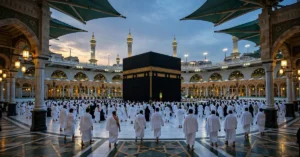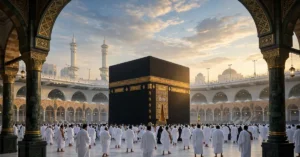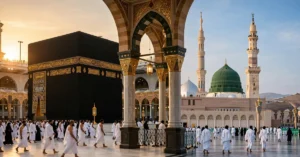

Introduction
If you live in the UAE and want to travel to Saudi Arabia more than once in a year, the question is not only which visa to get, it is which visa you are actually looking at. There are two different one year multiple entry visas, and most guides mix them up. One is the tourist eVisa. The other is the new multiple entry Umrah visa. Both last one year. Both allow multiple entries. But they count your stay differently, they are used for different trips, and they cost different amounts. This guide to the Saudi multiple entry visa cost for UAE residents separates the two visas, gives you the reported fees, and shows you how to apply.
This guide is only for UAE residents, including expats living in the UAE on a valid UAE residence visa. That includes Indian, Pakistani, Filipino, Bangladeshi, Egyptian and other passport holders who live in Dubai, Sharjah, Abu Dhabi or Ajman. It is not for people applying from Pakistan, Bangladesh or any other home country. A Pakistani or Bangladeshi passport holder living in the UAE is in scope, because the person is a UAE resident. A person living in Pakistan or Bangladesh is out of scope.
Read this first, before you pay anything: there is no single AED total that can be stated as the official government fee for this visa. Sources conflict, because insurance, VAT and the route change the total. This guide gives you the parts, the reported ranges, and tells you to check the live total at checkout on the official portal. Do not rely on one agency quote, and do not treat a single AED figure in any guide as the official fee.
Quick Answer: Cost, Validity and Stay
If you want the short answer first, here it is, with the warning attached.
- Tourist eVisa: valid for one year from the date of issue, multiple entries. The official portal says you can spend up to 90 days in the country. Most guides read that as up to 90 days per visit. Some Ministry wording is read as 90 days in total during the validity period. That conflict is real, and this guide explains it below. Check the stay limit printed on your own issued visa.
- Fee parts, tourist eVisa: the reported government fee is SAR 300, about USD 80, plus mandatory medical insurance and 15 percent VAT. The typical portal total reported is SAR 340 to SAR 480, about AED 335 to AED 470, for most adults under 60. The exact total is shown at checkout on the official portal, and it varies by age and insurance.
- New multiple entry Umrah visa: valid for 365 days from the date of issue, multiple entries, but total stay is 90 days in total across all trips, not 90 days per trip. It needs a Nusuk service package from an approved provider for every entry, plus a fresh Umrah permit for every trip. No single official UAE resident price was confirmed in the research for this guide, so its cost is reported as a range below, not as one official figure.
- Single entry Umrah visa: different again. Entry validity is 30 days from issue under the 2026 rule, as stated on our visa information page. Do not write 90 days for this visa.
Who Needs a Saudi Visa from the UAE
UAE citizens do not need a visa for Saudi Arabia. As GCC nationals, Emiratis can enter with a UAE passport or national ID. This rule is only for citizens. Expats living in the UAE on a residence visa still need a Saudi eVisa before travel, even if they have lived in the UAE for many years.
UAE residents who are expats need a Saudi eVisa before travel, on the GCC resident route. Your UAE residence visa must be valid for at least 3 months at the time of application, and in some official wording at least 3 months beyond the date of entry. Your passport must be valid for at least 6 months.
People on a UAE visit visa only are not residents for this route. They must apply on their nationality route, or through a consulate, or on arrival if they hold a valid US, UK or Schengen visa. Do not tell visit visa holders they can use the GCC resident route, because they cannot.
All professions are reported as open for GCC residents as of September 2026. The old approved profession list no longer applies, according to secondary sources citing Visit Saudi. Check your own eligibility on the official portal before you pay, because eligibility rules change.
Some nationalities are reported as not offered the GCC resident route on the Visit Saudi finder, including Chad, Ethiopia, Iran, Libya and Palestine. That was reported by a secondary source, not confirmed directly on the official portal in the research for this guide. This guide does not list a ban as certain. Check your own nationality on ksavisa.sa before you apply.
Two Visas Compared: Tourist eVisa vs Multiple Entry Umrah Visa

This is the section most guides get wrong, so read it carefully. Both visas last one year and allow multiple entries, but they are not the same visa.
| Tourist eVisa | Multiple entry Umrah visa | |
|---|---|---|
| Valid for | 1 year from date of issue | 365 days from date of issue |
| Entries | Multiple, unlimited entries in that year, according to the official portal | Multiple entries |
| Stay limit | Up to 90 days, portal wording, most guides read it as per visit, some read it as total | 90 days in total across all trips in the year, not per trip |
| Purpose | Tourism, family visits, business, events, leisure, and Umrah outside Hajj | Umrah only |
| Hajj | Not allowed, needs a separate Hajj visa | Not allowed, closed during Hajj season |
| Nusuk package | Not required for the visa itself, but an Umrah permit is needed for Umrah | Nusuk service package from an approved provider for every entry, plus a fresh Umrah permit for every trip |
| Launched | Tourist eVisa route already in use for UAE residents | Launched 20 July 2026 |
Which visa should you choose? If you want one Umrah trip only, a single entry Umrah visa or a package with visa support may suit you better, and our Umrah packages from Dubai page sets out the bus and air options. If you want repeat Umrah only, with no tourism or business trips, the multiple entry Umrah visa is the one built for that. If you want Umrah plus tourism, family visits or business in the same year, the tourist eVisa is the flexible choice. If you want to travel more than once for any reason, a multiple entry visa saves you from applying again for each trip, but it does not give you unlimited days. The stay limit still applies.
How Much Does It Cost: The Fee Breakdown

This section gives you the parts, not one invented total. Every figure below is labelled as reported, because the sources conflict.
Tourist eVisa, portal route
- Government visa fee, widely reported from the KSA Visa portal: SAR 300, shown as USD 80.
- Digital service fees, reported from the KSA Visa portal: USD 10.50 for the visa plus USD 10.50 for insurance, so USD 101 before insurance.
- Mandatory medical insurance: reported as about SAR 30 to SAR 900, chosen inside the portal, price depends on age and cover. Other sources report about SAR 180 to SAR 200 for insurance.
- VAT: 15 percent, added at checkout, reported in several guides.
- Typical portal total reported: SAR 340 to SAR 480, about AED 335 to AED 470, for most adults under 60.
- A different portal listing, reported as Visit Saudi: SAR 395, about USD 105.32, with application fee and medical insurance included.
- A GCC resident route listing, reported from ksavisa.sa: SAR 339.44, about USD 90.50, insurance not included.
Why do the totals differ? Because the insurance you choose, your age, and the route you use change the total. Older applicants pay more for insurance. The portal shows your exact total at checkout, before you pay. Check it there, and do not treat any one figure in this guide as your final total.
A multiple entry tourist eVisa total of SAR 535, about AED 525, is reported in some guides. That figure is not confirmed as the current portal total for UAE residents, and it conflicts with the SAR 300 fee above. Treat SAR 535 as not confirmed for this blog, and do not use it as your budget figure.
Our own visa page says the tourist eVisa is about SAR 650, approx. AED 640, including insurance, plus service charges. That conflicts with the portal figures above, so this guide does not repeat it as the official price. It needs a fresh portal check before use.
Multiple entry Umrah visa, cost reported
No single official UAE resident price was confirmed in the research for this guide. Secondary sources report Dh600 to Dh650 through an agency, Dh300 to Dh600 standalone, and about SAR 535 total online, about USD 142 to USD 150. The total also depends on the Nusuk service package for each trip. Check the live price on Nusuk before you pay, and do not rely on one agency quote.
Agency prices, labelled separately
Agency all-inclusive prices in the UAE, not government fees: AED 700 to AED 900 reported, WhiteSky AED 800, VisaWadi AED 700. Label these clearly as agency prices, not the official fee. An agency price usually covers the official charge, mandatory insurance and the application service, but confirm what is included before you pay, and confirm whether flights, hotels, transport or Umrah arrangements are included. They usually are not.
Government fees are non refundable once submitted, according to the portal rules reported in the research. An agency may offer its own refund promise, but that is the agency promise, not the government rule. Do not promise a refund this guide does not offer.
Validity and Stay: The 90 Day Trap
The 90 day rule is where most travellers get caught, because the two visas count days differently, and even the tourist eVisa wording is read two ways.
Tourist eVisa: the official portal says you can spend up to 90 days in the country. Most guides read that as up to 90 days per visit, with the clock restarting on each entry. Some Ministry of Tourism wording is read as 90 days in total during the validity period. That is a conflict. This guide states the official portal wording, up to 90 days, and warns you to check the stay limit printed on your own issued visa.
Multiple entry Umrah visa: the limit is 90 days in total across all trips in the year, not per trip. That is different from the tourist eVisa, and it is the trap. If you take three Umrah trips of 30 days each, you have used your 90 days. If you take one trip of 20 days, you have 70 days left for the rest of the year. Plan to the stricter reading until the portal wording is checked: keep your total days inside 90 days, and keep no single visit beyond 90 days.
Worked example, repeat short trips: a pilgrim takes three trips in one year, 10 days, 12 days and 15 days. That is 37 days in total. Under the per visit reading, each trip is well inside 90 days. Under the total reading, 37 days is also inside 90 days, so both readings agree for short trips. The readings only disagree for long stays.
Worked example, one long stay: a traveller stays 80 days on one trip, leaves, then tries to return for another 30 days. Under the per visit reading, the second trip is a new visit of 30 days. Under the total reading, the traveller has only 10 days left in the year. Plan to the total reading, and check your remaining days before each trip.
Before each trip, check three things: the expiry date on your visa, your remaining stay days under the stricter reading, and your residence visa and passport validity. A tourist eVisa cannot be extended. You must leave before your stay limit ends. If the one year validity is still running, you can re-enter on the same multiple entry visa. If the visa has expired, you must apply for a new eVisa before your next trip.
Eligibility for UAE Residents, in Detail
You need a passport valid for at least six months, with blank pages. You need a UAE residence visa valid for at least three months. You need an Emirates ID copy, front and back, for the GCC resident route. You need a recent passport size photo on a white background. You need a payment card for online payment. Medical insurance is selected and paid during the application, and it is mandatory.
First degree relatives and domestic workers travelling with the resident are reported as eligible on the same route. Treat that as check on the portal, not as a confirmed fact in this guide. Apply for each person separately on the portal, and check each person’s eligibility before you pay.

Indian passport holders living in the UAE can apply for a Saudi multiple entry visa through the GCC resident route, if the UAE residence visa is valid for at least three months and the passport is valid for at least six months. The fee is the same portal fee, plus insurance. Check your eligibility on ksavisa.sa before you pay.
Pakistani passport holders living in Dubai can apply through the GCC resident route, because UAE residence is the qualifier, not the passport alone. You need a UAE residence visa valid for at least three months and a passport valid for at least six months. Some nationalities face extra checks, so apply early and check ksavisa.sa.
Hotel booking, return ticket, invitation letter, or bank statement are not required for the online eVisa application, according to several guides. These may be asked at immigration, but they are not part of the online form. Treat that as secondary, and carry travel proof with you anyway.
How to Apply from Dubai, Step by Step

Go to the official portal, visa.visitsaudi.com or ksavisa.sa, choose Tourism, then select valid residence in GCC countries. Enter your passport and UAE residence details, upload a photo, choose medical insurance, and pay by card. Approval is usually sent by email. No embassy visit is needed for most UAE residents.
- Open the official portal, visa.visitsaudi.com or ksavisa.sa, and choose Tourism.
- Select valid residence in GCC countries, and enter your passport and UAE residence details.
- Upload a recent passport size photo on a white background, and check that your name matches your passport exactly.
- Choose your medical insurance inside the portal, and check the total at checkout before you pay.
- Pay by card, and save your transaction number and the email address you used.
- Wait for approval by email. A Saudi tourist eVisa for UAE residents is usually approved fast, often in minutes to 24 hours, and up to three working days if the application is reviewed manually. The new multiple entry Umrah visa is reported to take about two working days. Apply early in busy weeks, and do not book non-refundable travel before approval.
- Check your issued visa when it arrives: the validity dates, the stay limit, and the name spelling. If anything is wrong, contact the portal support before you travel, not at the airport.
For the multiple entry Umrah visa, apply through Nusuk, nusuk.sa. You need a Nusuk service package from an approved provider for every entry, plus a fresh Umrah permit for every trip. The rules for this visa, including the fresh Nusuk package per visit and the Hajj season exclusion, must be rechecked on the official Nusuk portal before you apply, because visa rules change.
If you prefer help with the Umrah travel itself, after your visa is approved, our cheap Umrah packages from the UAE page sets out the bus option from AED 1,200, and the Umrah package by air from Dubai page has the air option from AED 2,700. Do not claim a package includes the multiple entry visa unless that is confirmed for that package.
Umrah on a Tourist eVisa
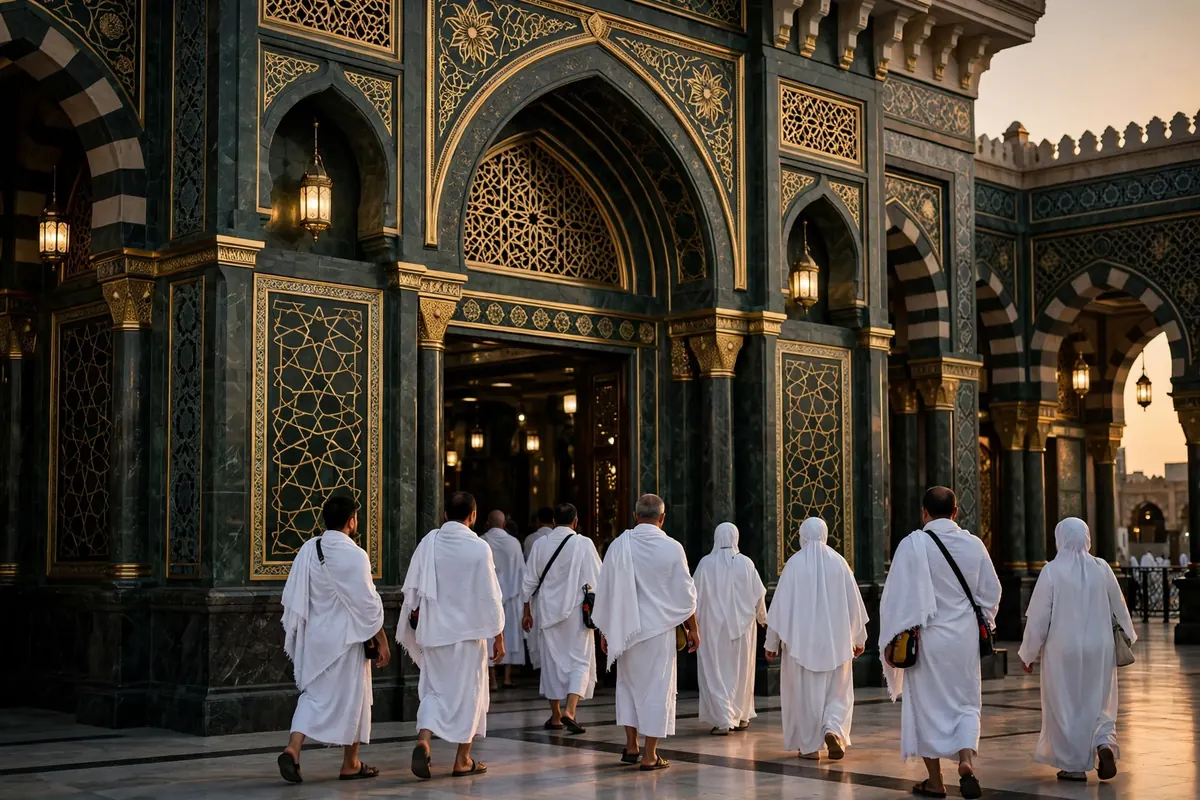
Yes, UAE residents can perform Umrah on a Saudi tourist eVisa outside the Hajj season. You do not need a separate Umrah visa for that trip. You still need an Umrah permit through the Nusuk app before you enter Masjid al-Haram, and a Rawdah permit for Madinah. Hajj needs a separate Hajj visa.
The visa only allows entry to Saudi Arabia. The Nusuk permit allows entry to Masjid al-Haram for Umrah, and a separate Rawdah permit is needed in Madinah. Book both permits before travel, because slots can fill fast. For the rites themselves, read our How to Perform Umrah Step by Step guide, our Ihram Guide for Umrah for what to wear and the rules, and for the sites in both cities, read our Makkah and Madinah Ziyarat Guide. For what to pack, read our Umrah Packing List from Dubai.
The multiple entry Umrah visa is different: it is only for Umrah, and it needs a Nusuk service package for every entry. The tourist eVisa is the flexible choice if you also want tourism, family visits or business in the same year. If your only goal is repeat Umrah, compare the total cost across a year, including the Nusuk package for each trip, before you choose.
Driving to Saudi Arabia from the UAE

Yes, you can drive to Saudi Arabia from the UAE on a Saudi tourist eVisa, if the eVisa is approved before you reach the border. The eVisa is valid at land crossings, including the Abu Dhabi crossing. GCC citizens need no visa to drive across. Carry your passport, eVisa, car documents and an International Driving Permit.
Do not arrive at the border without an approved eVisa and expect a visa on arrival. Check your eVisa, your passport validity, and your car documents before you leave the UAE. Keep your eVisa saved on your phone and printed on paper, so you can show it even if data is slow at the border.
Can You Extend, Renew or Reapply
No, you cannot extend a Saudi tourist eVisa from inside Saudi Arabia. You must leave before your stay limit ends. If the one year validity is still running, you can re-enter on the same multiple entry visa. If the visa has expired, you must apply for a new eVisa before your next trip.
Renewal, in practice, means a new application after expiry. There is no renewal button that extends the same visa. Apply again through the official portal, with the same documents, and check the fee at checkout again, because insurance and VAT may have changed.
If your UAE residence visa is cancelled during a job change, do not travel on a Saudi eVisa that was based on that residence visa until you have checked your status. A cancelled residence visa can affect your eligibility, and you may need to apply again after your new residence visa is issued. Apply early, and check the portal before you book travel.
Common Mistakes to Avoid

- Applying on a UAE visit visa through the GCC resident route. That route needs a valid UAE residence visa, not a visit visa. Visit visa holders must use their nationality route, a consulate, or an arrival route if they hold a valid US, UK or Schengen visa.
- Mixing up the two one year visas. The tourist eVisa and the multiple entry Umrah visa both last one year, but the stay counting is different. Read the comparison table above before you choose.
- Planning to the per visit reading only. If the total reading turns out to be the one printed on your visa, a long stay can use up your whole year allowance. Plan to the stricter reading.
- Name mismatch or wrong photo. Your name must match your passport exactly, and your photo must be recent, on a white background. A mismatch is a common reason for delay or refusal.
- Residence visa under three months or passport under six months. Check both before you apply. If either is short, renew it first.
- Booking non-refundable travel before approval. Approval is usually fast, but manual review can take up to three working days. Wait for the email.
- Travelling for Hajj on these visas. No, you cannot use a Saudi tourist eVisa or a multiple entry Umrah visa for Hajj. Hajj needs a separate Hajj visa, issued through the official Hajj process and a licensed Hajj operator. The multiple entry Umrah visa is also closed during the Hajj season, reported as 1 Dhu al-Qidah to 13 Dhu al-Hijjah. Do not travel for Hajj on these visas.
- Forgetting the Nusuk permit. The visa is not the permit. Book your Umrah permit and Rawdah permit on Nusuk before travel.
Overstay and Hajj Season
Leave before your stay limit ends. Overstay can lead to fines and trouble with future visa applications, so do not treat the stay limit as flexible. This guide does not state a fine amount, because no fine amount was confirmed in the research for this guide. Check the official rules before you travel, and keep your exit date inside your visa validity and stay limit.
Umrah is not performed during the days of Hajj. Saudi Arabia pauses Umrah visas for several weeks around Hajj each year, and the dates are set annually. The pause moves each year because the Islamic calendar is lunar. Check the Hajj dates before you book a trip around that time. The multiple entry Umrah visa is closed during the Hajj season, reported as 1 Dhu al-Qidah to 13 Dhu al-Hijjah.
Frequently Asked Questions
1. How much does a Saudi multiple entry visa cost for UAE residents?
The reported government fee for a Saudi tourist eVisa is SAR 300, about USD 80, plus mandatory medical insurance and 15 percent VAT. The typical portal total reported is SAR 340 to SAR 480, about AED 335 to AED 470. The exact total is shown at checkout on the official portal, and it varies by age and insurance.
2. Is the Saudi multiple entry visa free for UAE residents?
No, the Saudi multiple entry visa is not free for UAE residents. UAE citizens enter Saudi Arabia visa-free as GCC nationals, but expats living in the UAE must pay for a tourist eVisa. The government fee is reported as SAR 300, plus insurance and VAT. Agency service charges are extra if you apply through an agent.
3. How long is a Saudi multiple entry visa valid for UAE residents?
A Saudi tourist eVisa for UAE residents is valid for one year from the date of issue, with multiple entries. The new multiple entry Umrah visa is also valid for 365 days from issue. A single entry Umrah visa is different, with an entry validity of 30 days under the 2026 rule. Always check the dates printed on your issued visa.
4. How many days can I stay in Saudi Arabia on a multiple entry visa?
On a tourist eVisa, the official portal says you can spend up to 90 days in the country, and most guides read that as up to 90 days per visit. On the new multiple entry Umrah visa, the limit is 90 days in total across all trips in the year, not per trip. Check the stay limit on your own visa before travel.
5. Can UAE residents do Umrah on a Saudi tourist eVisa?
Yes, UAE residents can perform Umrah on a Saudi tourist eVisa outside the Hajj season. You do not need a separate Umrah visa for that trip. You still need an Umrah permit through the Nusuk app before you enter Masjid al-Haram, and a Rawdah permit for Madinah. Hajj needs a separate Hajj visa.
6. Do UAE citizens need a visa for Saudi Arabia?
No, UAE citizens do not need a visa for Saudi Arabia. As GCC nationals, Emiratis can enter with a UAE passport or national ID. This rule is only for citizens. Expats living in the UAE on a residence visa still need a Saudi eVisa before travel, even if they have lived in the UAE for many years.
7. How do I apply for a Saudi multiple entry visa from Dubai?
Go to the official portal, visa.visitsaudi.com or ksavisa.sa, choose Tourism, then select valid residence in GCC countries. Enter your passport and UAE residence details, upload a photo, choose medical insurance, and pay by card. Approval is usually sent by email. No embassy visit is needed for most UAE residents.
8. What documents do I need for a Saudi visa from the UAE?
You need a passport valid for at least six months, a UAE residence visa valid for at least three months, an Emirates ID copy, and a recent passport size photo on a white background. You also need a payment card, and medical insurance is selected and paid during the application. Hotel booking is not required for the online form.
9. How long does a Saudi eVisa take for UAE residents?
A Saudi tourist eVisa for UAE residents is usually approved fast, often in minutes to 24 hours, and up to three working days if the application is reviewed manually. The new multiple entry Umrah visa is reported to take about two working days. Apply early in busy weeks, and do not book non-refundable travel before approval.
10. Can an Indian passport holder living in the UAE apply for a Saudi multiple entry visa?
Yes, an Indian passport holder living in the UAE can apply for a Saudi multiple entry visa through the GCC resident route, if the UAE residence visa is valid for at least three months and the passport is valid for at least six months. The fee is the same portal fee, plus insurance. Check your eligibility on ksavisa.sa before you pay.
11. Can a Pakistani passport holder living in Dubai apply for a Saudi multiple entry visa?
Yes, a Pakistani passport holder living in Dubai can apply through the GCC resident route, because UAE residence is the qualifier, not the passport alone. You need a UAE residence visa valid for at least three months and a passport valid for at least six months. Some nationalities face extra checks, so apply early and check ksavisa.sa.
12. What is the difference between a Saudi tourist eVisa and a multiple entry Umrah visa?
A tourist eVisa is for tourism, family visits, business and Umrah outside Hajj, valid for one year with multiple entries and up to 90 days per visit. A multiple entry Umrah visa is only for Umrah, valid for 365 days, with 90 days in total across all trips. It also needs a Nusuk service package for every entry.
Plan Your Umrah with UAE Umrah
Once your visa is approved, we can help with the travel itself. UAE Umrah arranges visa support, flights or bus, hotels, transport in Saudi Arabia, the Haramain train journey, an experienced guide, and Ziyarat, so you can focus on your worship. Our air packages start from AED 2,700 per person on quad sharing, and our bus packages start from AED 1,200 per person on quad sharing.
Message us on WhatsApp at +971 56 704 4355 or view all packages. UAE Umrah and Travels, Al Hana Center, Office 16, 2nd Floor, Al Mankhool Rd, Al Jafiliya, Dubai. Email: info@uaeumrah.com.
For your visa, check the Saudi eVisa portal and our visa information page. For your Umrah and Rawdah permits, book through Nusuk before you travel.
Follow UAE Umrah & Travels: Facebook | LinkedIn | Google Maps | Trustpilot